You lift.
It picks
the load.
Every other log writes down what you did. This one decides what you do next.
The engine
Eight weeks, decided for you.
- wk 160kgAdd Top of the range, all five sets.
- wk 262.5kgAdd Again. The bar goes up again.
- wk 365kgHold Landed mid-range. Earn it clean first.
- wk 465kgAdd Cleared it. Moving on.
- wk 567.5kgAdd Still climbing.
- wk 670kgDrop Fell short at the bottom. Back off one.
- wk 767.5kgAdd Rebuilt the rep. Up you go.
- wk 872.5kgAdd Twelve and a half kilos, no guessing.
The engine
Scroll. The bar
loads itself.
Top of the range, all five sets.
Week 1 of 8
Laid out by the same plate maths the app hands you mid-session — largest first, from the collar out.
It adjusts while you lift.
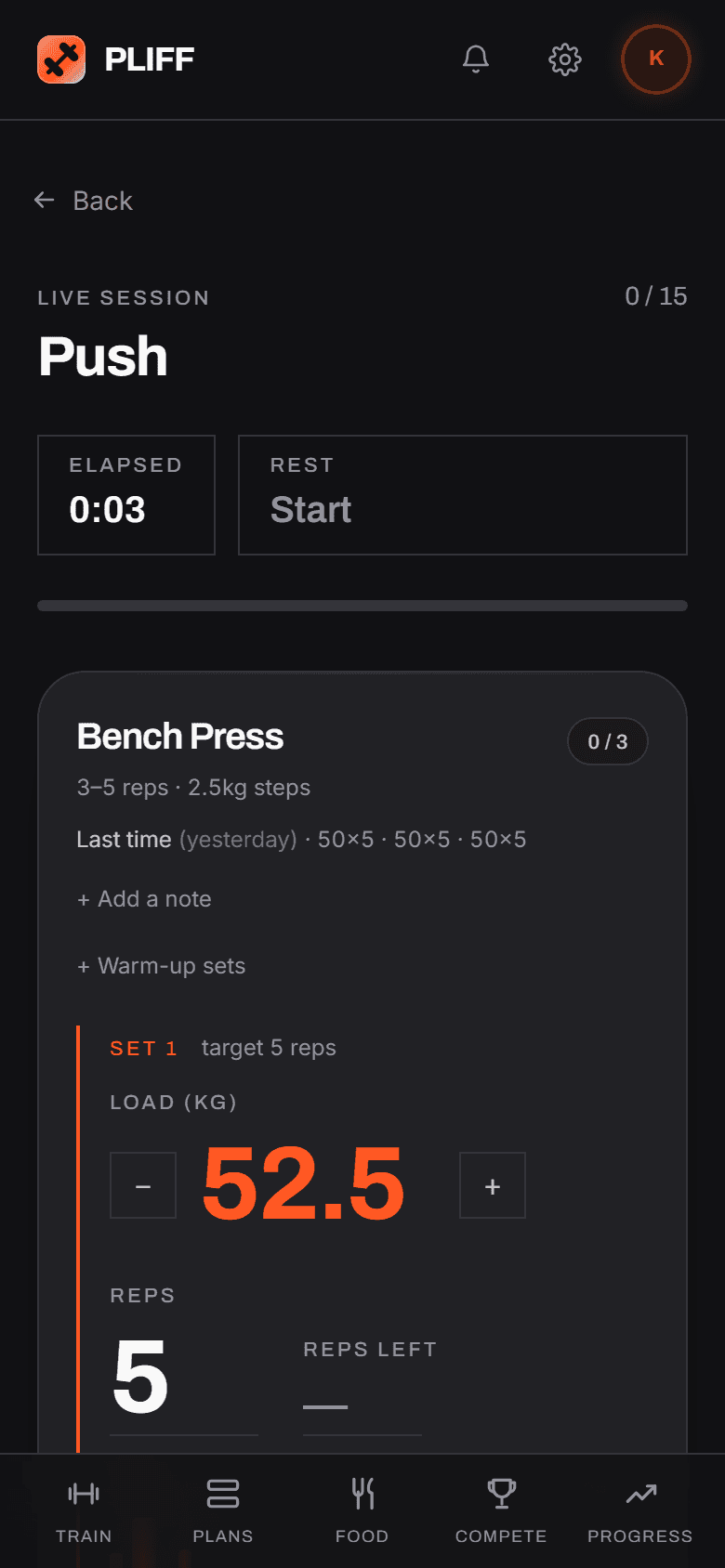
Log a set and PLIFF grades it, then rewrites the weight on every set you have left — up when it flew, down when it dragged, hold when it was honest work. Never a jump. Try it:
Bench Press
0 / 3 setsLast week you pressed
50kg
So this morning it says
52.5kg
You did not decide that. You did not work it out between sets. It was waiting for you when you opened the app.
It tells you
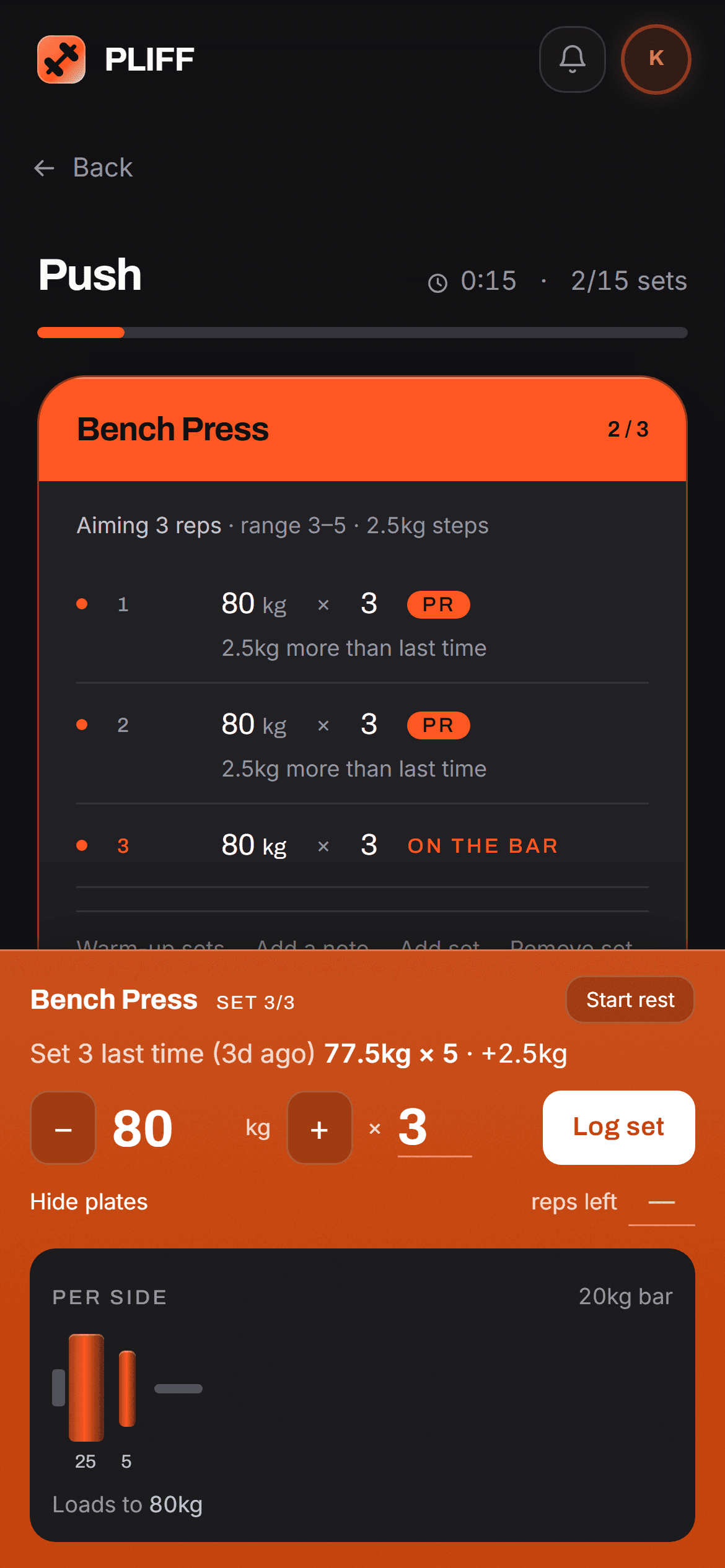
what to hang
on the bar.
Per side, largest plate first, using the plates your gym actually owns. If a weight cannot be built, it says so and gives you the closest one that can.
The gym Wi-Fi dies.
It keeps working.
PLIFF installs to your home screen and runs offline. Sets logged in the dead zone by the squat racks sync themselves the moment you have signal again.
Nobody quits the week they are losing.
Add the people you train with, send them a plan you like, and start a challenge — most sessions, most weight moved, most reps. Scores keep themselves off the sets everybody is logging anyway.
They see the board. They do not see your log.
How training together works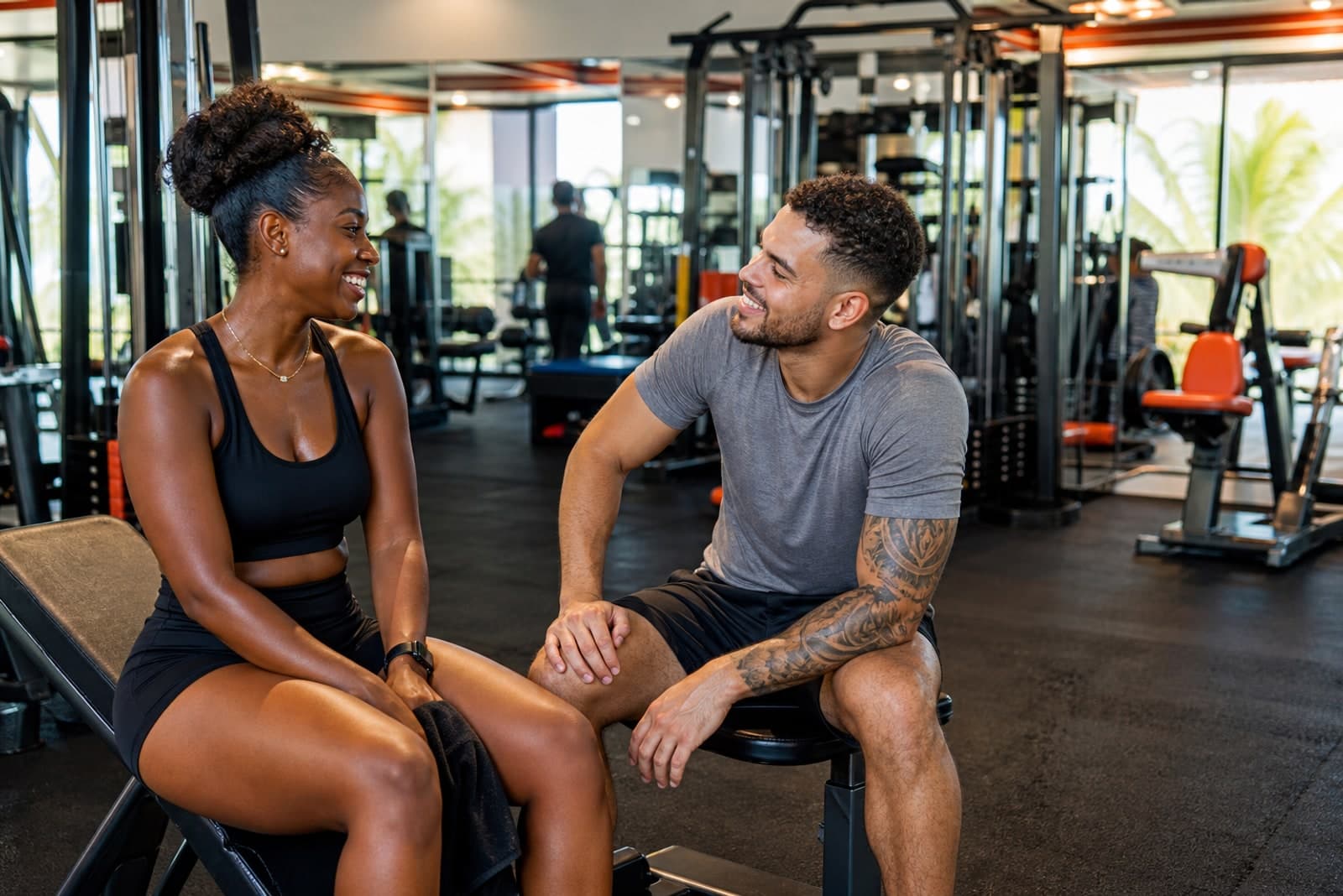
Not a mockup.
This is the app.
Today’s weight
Mid-session
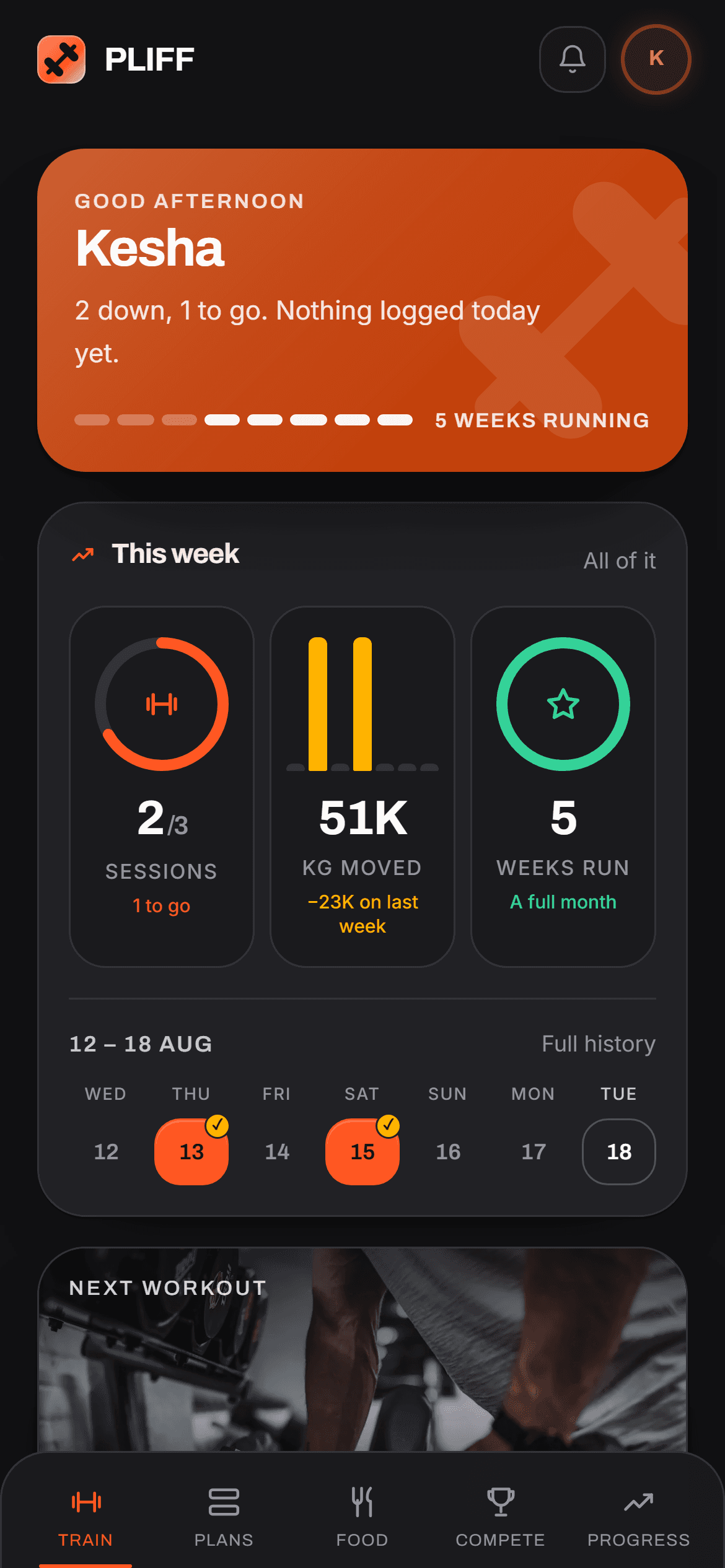
Your week
Every morning
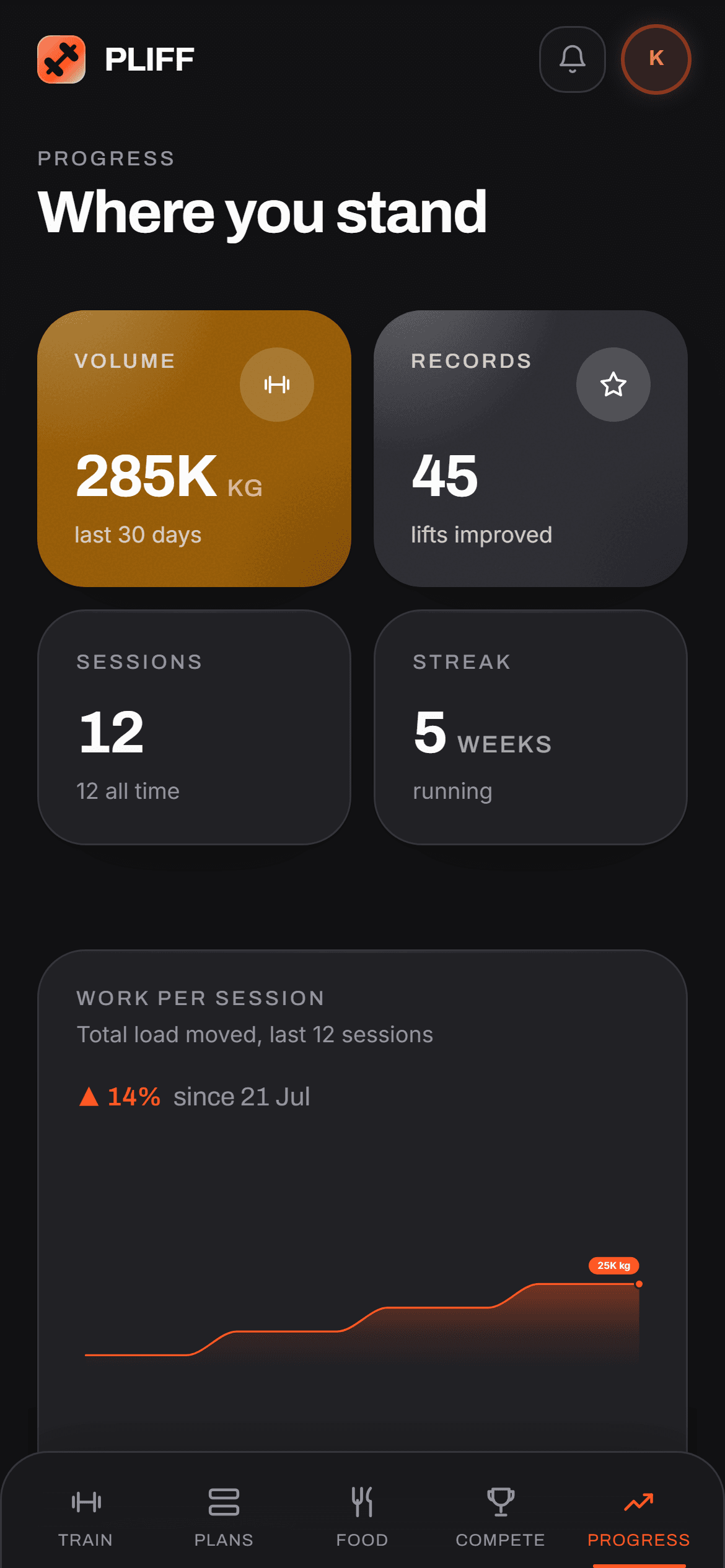
The proof
After a month
One month free. Then the price of a protein shake.
No card to start. Every feature is in every plan — there is no crippled tier and nothing is held back to upsell you later. Pay by local bank transfer or mMoney, in Barbados dollars.
Individual
$5 /month
BBD · $60 billed yearly · 30-day free trial
- ✓The progression engine, mid-session and between
- ✓Progress charts, PRs and estimated 1RM
- ✓Plate maths, rest timer, warm-up ramps
- ✓Installs to your phone, works offline
- ✓Export your data whenever you want
Gyms and coaches
$900 /year
BBD · covers 20 people · four bands up to 400
- ✓Everything above, for everyone you cover
- ✓Who is training, and who has stopped logging
- ✓Add people by email, or one join code
- ✓No seat counting, one invoice a year
- ✓They keep their history if they leave you
Prices in Barbados dollars (BBD). Cancel any time — you keep access to the end of the period you paid for, and your data stays yours to export.
Before you ask
The questions everybody asks
Do I have to plan my workouts?
No — that is the whole point. Pick a plan to start from and PLIFF decides the weight for every set: the next one while you are still in the session, and the next session once you finish. If a set goes badly it backs off; if it goes well it adds. You show up and lift.
Does it work without signal?
Yes. PLIFF installs to your home screen and runs offline, which matters in a gym where the phone signal dies somewhere near the squat racks. Sets you log offline are queued and sync themselves the moment you are back on.
What does it cost, and do I need a card?
Every account starts with a free month and no card is asked for. After that, individuals pay for a twelve-month term, and gyms buy a band covering a number of members rather than counting seats one at a time. Prices are in Barbados dollars.
Can my gym see my bodyweight?
Never. Gym staff see your attendance and your training volume, because that is what they are paying for. Your bodyweight is not shown to a coach, an owner, or on any export — there is no setting that could reveal it by accident. Food and nutrition are shared only while you allow it, and you can stop that at any time.
I already have members. How do I get them on?
Two ways, and you can use both. Send invitations by email straight from the roster, or share your gym join code — on WhatsApp, on a sign at the desk, however you like. Anyone joining on your code is covered by your plan and never asked to pay.
What happens to my training if I leave a gym?
It stays yours. Your account, your history, and your records are your own — a gym removing you from their roster only stops them seeing your training. Nothing is deleted, and you can export everything as JSON or CSV whenever you want.
Is it a replacement for a coach?
No. It handles the arithmetic a coach would otherwise do between sets — what to load next, and what that means for next week. It knows nothing about your injuries, your sleep, or your technique. A good coach is still a good coach; PLIFF just stops them spending the session doing sums.
Stop guessing
your next weight.
Set up in the time it takes to warm up. A month free, no card — PLIFF picks the load, you just show up and pull.